Keeping The Landmark, Building The Sound
A building nobody wanted to lose
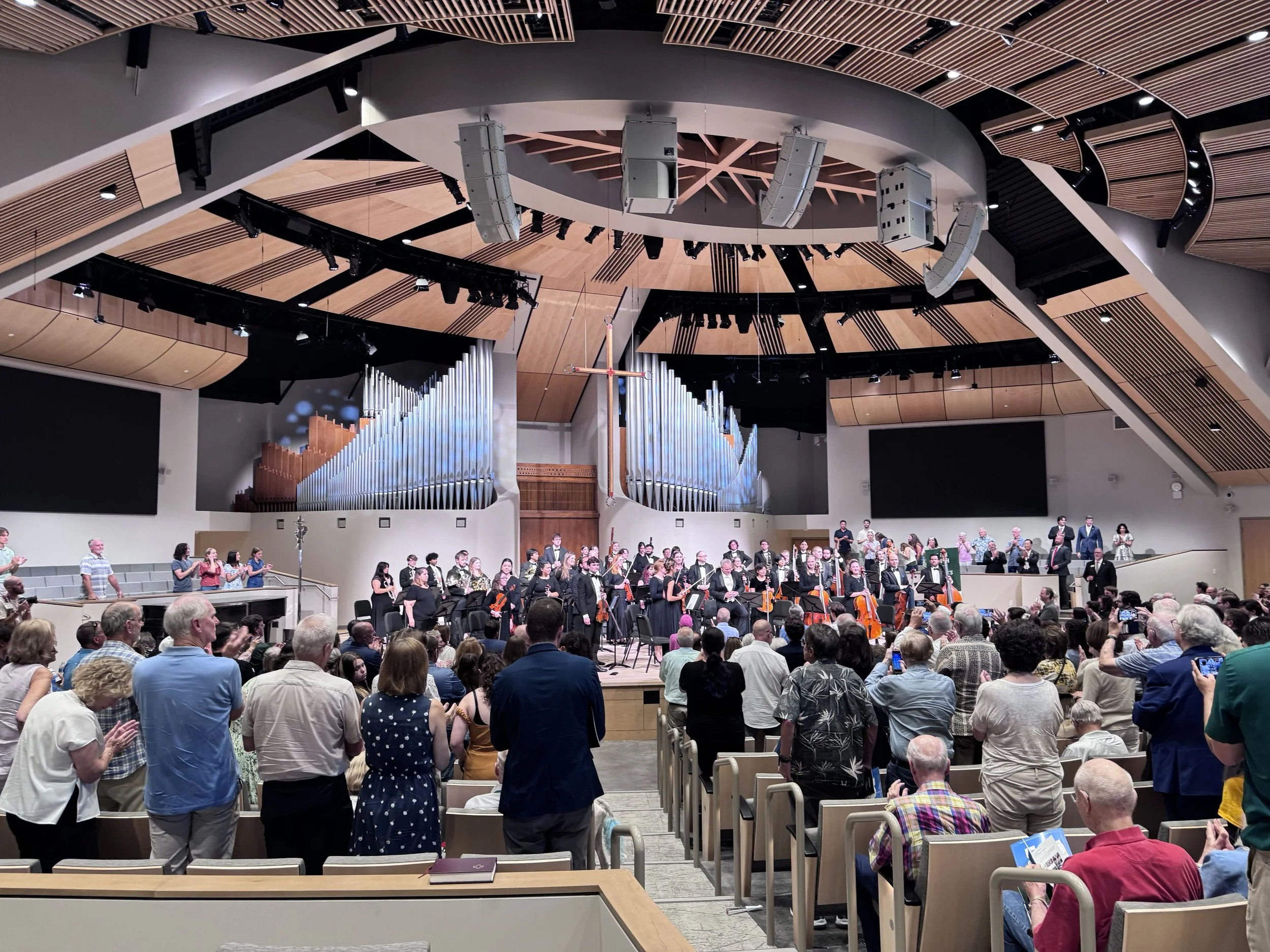
Since the 1980s, the CU Center has been the heart of Concordia University Irvine, a private Lutheran university in Orange County with a serious musical life: organ, orchestra, choir. It is where the campus worships, where its ensembles perform, and where the big university moments happen.
It had also been outgrown. The old hall seated around 350, and its acoustics were working against everyone: a cone-shaped ceiling, a round floor plan, glass, and hard reflective surfaces everywhere. Very strong, very loud, and very hard to control.
On paper, the tidy answer would have been a new building with a different shape. But the CU Center is a campus landmark, and Concordia wanted to keep it. So, the brief became something far more interesting: keep the iconic profile, make the room bigger, and make it sound right for everything from a spoken sermon to a full choir and organ.
Half a building
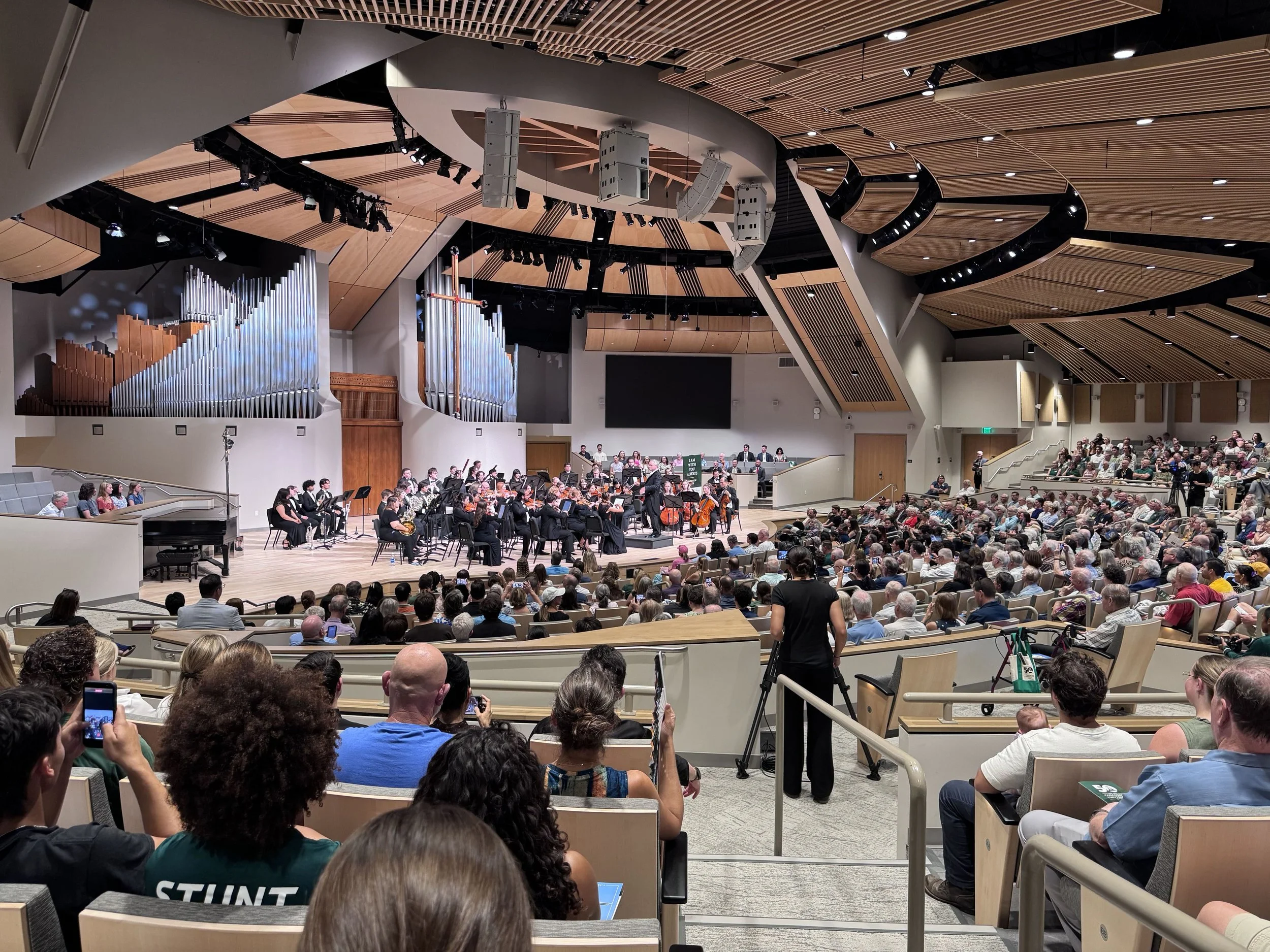
The renovation was radical. The building was essentially cut in two. The stage half stayed; the audience half was dismantled completely, then rebuilt and extended. The footprint grew by more than 6,000 square feet, and capacity rose from around 350 to 700, with a larger stage and choir lofts built into the platform, which fit 110.
What the new hall could not escape was its shape. A round room focuses sound, and there was no way to design that out without losing the building itself. Tim Odle, Vice President of University Operations, summed up the approach to the student newspaper during construction: unlike Concordia's other halls, this one is built so that "we have electronics that create the acoustics."
That could only mean one thing: active acoustics. The natural room was deliberately made very dry, with absorption and diffusion designed for a reverberation time of around 1 second at mid frequencies and 0.8 seconds at low frequencies. That is ideal for amplified music, and it keeps the focusing effects of the round shape in check. Everything beyond that is created by the Amadeus ART system.
A demo in Infocomm, a detour to Graz
Amadeus came into the conversation when acoustic and AV consultant Jeff Miller of Salas O'Brien heard our demo with Renkus-Heinz at InfoComm and brought us to the table.
The deciding moment happened in Austria. Dr Jeff Held, Assistant Dean and Director of Arts, visited Europe and made a stop at MUMUTH, in Graz, to hear an Amadeus Acoustics system for himself. He was convinced on the spot.
From there, Jeff Miller designed the system with our support, built around Renkus-Heinz loudspeakers and DPA microphones. This ART Acoustics system runs on an ART::AP128 (Acoustics Performance, 128 outputs) module together with ART::XP96, our channel extension module for ART::Performance applications (which extends the output with further 96 channels), across two ART::Hub 2 units. Sound Image, part of Clair Global, won the integration contract, with Kelly Barger and Mike Mendoza leading the team.
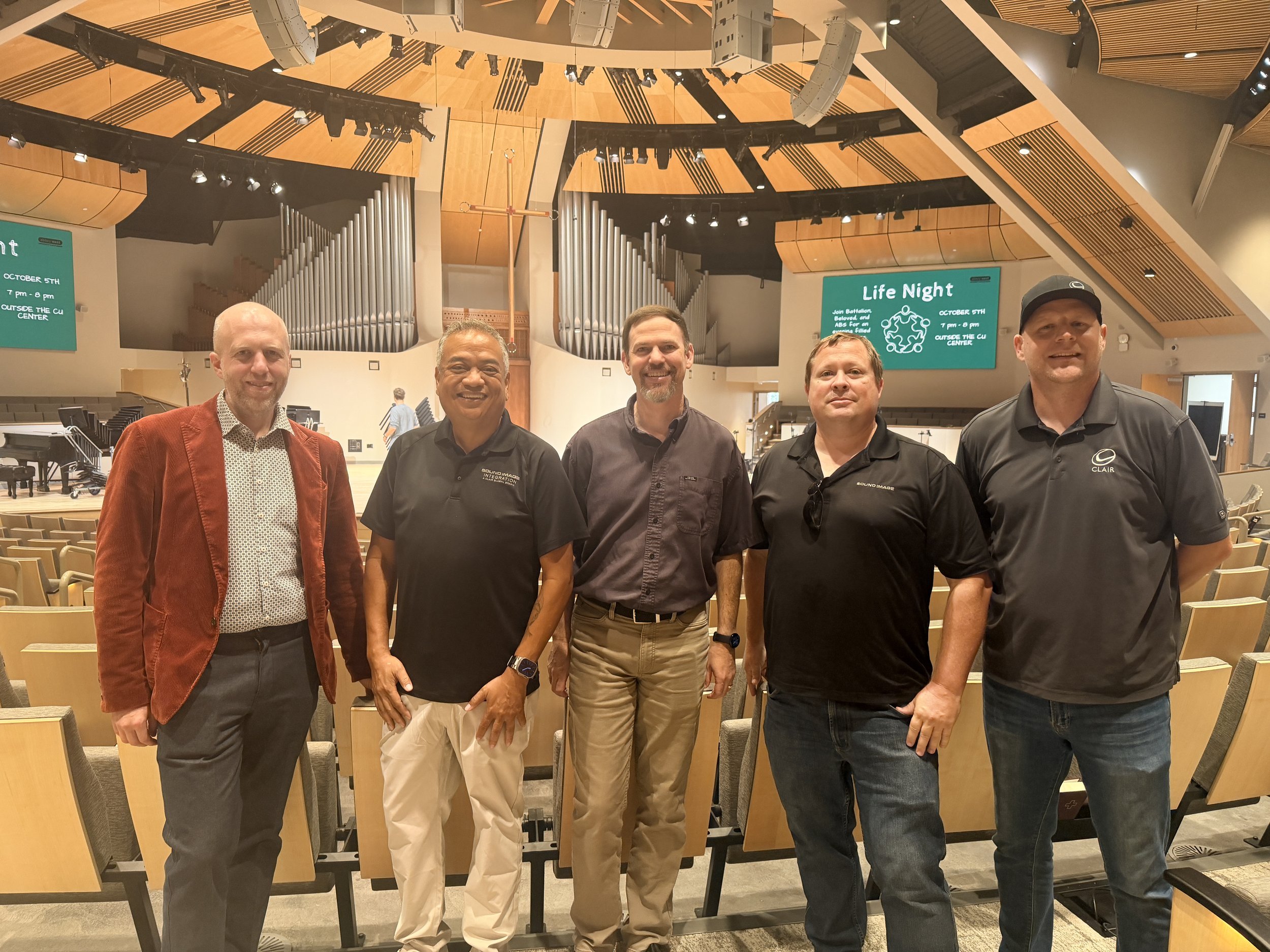
Left to Right: Volker Werner (Amadeus Acoustics), Michael Mendoza (Sound Image Integration) Jeff Miller (Salas O'brien), Kelly Barger (Sound Image Integration), Brandon Rinas (Clair Global Integration)
The tuning process
The initial tuning took place in summer, while the university was closed. Joining the Amadeus Acoustics team was Jeremy Alison of AVLex, Jeff Miller, and Jeff Held who brought in ensembles to play the room.
However, one voice was missing: the organ. As part of the renovation, Concordia's Casavant organ was being completely rebuilt, its pipes sent off to an organ workshop, with a new console on the way.
So, when the first services began, the university used samples of the Casavant in Hauptwerk, a world-renowned virtual organ, through the main PA. Despite the high quality of the samples, it did not work for two very good reasons: First, the main PA had been designed for strong rejection on stage, so the choir and pastor could hardly hear the organ. Secondly, the Amadeus ART system had been designed for maximum rejection of the main PA, to keep speech clear, which meant a virtual organ coming out of the PA barely excited the active acoustics at all.
During the initial weeks of operation, we received valuable insights to help optimise the system. Rev. Dr. Steven Mueller, who for decades has helped shape the heart and mission of Concordia University Irvine, was the first to provide detailed feedback regarding the specific acoustic requirements of their worship settings.
He noted that the congregation required enhanced lift and envelopment to better support congregational singing. Furthermore, while the initial presets for contemporary services felt overly live, particularly in the higher frequencies, these settings still required substantial acoustic lift for the congregation alongside effective sound rejection from the worship band.
When we returned for the second tuning, we addressed Rev. Dr. Mueller’s feedback and developed a way to make the virtual organ a reliable, usable temporary solution. We took it out of the main PA and brought it into the Amadeus ART system as an immersive source, mapped to the organ façade, giving it proper presence in the hall and projection back onto the stage.
We are looking forward to the rebuilt Casavant being back in place, so that the ART system can give the real pipe organ the large, immersive space it deserves.
“Working with Volker and the entire Amadeus Acoustics team was an outstanding experience. They were knowledgeable, responsive, and genuinely committed to making this installation successful. They delivered on both their service commitments and our expectations. When you’re introducing a technology of this caliber into a project with so many moving parts, having that level of support makes a tremendous difference.”
- Mike Mendoza, Project Manager, Sound Image Integration
The result: presets and a reshaped room
Then came the presets and, with a university focused on using technology creatively to enhance art and service, there were plenty of them. To make them manageable week in, week out, we organised them into three groups:
Traditional Service (4 presets): rich and enveloping, while keeping the voice clear and intelligible. The four presets give the congregation different amounts of lift, from none at all to high.
Contemporary Service (4 presets): clear and dry again, with four levels of lift for congregational singing. The plan is to connect these to the mixing console, so engineers can bring the lift in at exactly the right moments in each song.
Music & Events (9 presets): from spoken word, through chamber, symphonic, choral and organ music; all the way to intimate and highly enveloping settings like Contemplation, a preset that creates a gentle sense of spaciousness with soft reverberation and a calm, peaceful character.
A room built to reverberate for around a second can now stretch to five, and back again, at the touch of a preset.
However, reverberation time is only part of the story. Some of the most important work the ART system does at Concordia goes beyond. Using our geometric approach, the system virtually reshaped the room itself:
Straightened out the ceiling and lifted it, for more volume.
Straightened the side walls, removing the focus effects.
Created good first reflections from the back wall to the stage for hall response as well as in-stage reflections for cross-communication between performers.
“What impressed me most about the Amadeus ART system is that you don’t have to eliminate all of the natural acoustic reflections in the room to achieve an exceptional result. There is something special about hearing the natural character of a space. When that is complemented by a system capable of enhancing and shaping the acoustic environment, the result is a very natural, pleasant, and immersive listening experience.”
- Mike Mendoza, Project Manager, Sound Image Integration
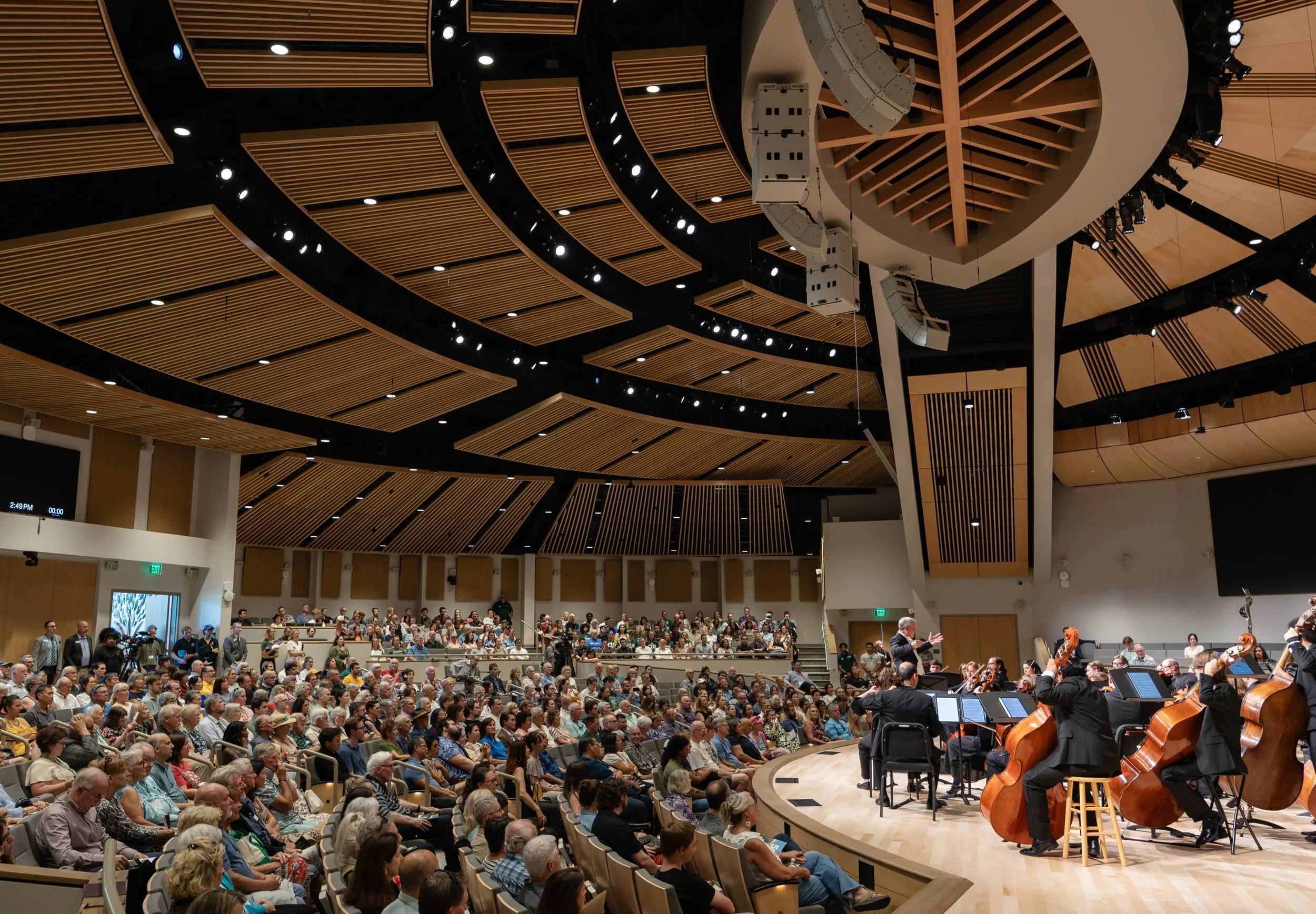
Photo credit: Kevin Rogers
Beethoven's Fifth, and a link to Vienna
At the ribbon-cutting for the new CU Center, the university's symphony orchestra played Beethoven's Fifth Symphony, a piece that premiered at Vienna's Theater an der Wien, with Beethoven himself conducting. Today, the Theater an der Wien runs an Amadeus Acoustics system too, and that was one reason why Concordia chose the piece: a gesture that we were genuinely touched by.
As further proof of the importance of the ART System in this project: on the second day of the opening, the hymn festival moved through six different acoustic presets in a single show.
"The opening weekend established the CU Center as a premiere concert hall and a community-connecting worship center, with impressively natural-sounding acoustics. This instantly adds prestige to our university music department and draws hundreds daily to join in our primary function of Christian ministry."
- Dr. Jeff Held, Assistant Dean and Director of Arts at Concordia University Irvine
While Concordia could have taken the more ‘straight-forward’ route and start again with a new building, they actively chose to keep the one their community loves and asked the sound to do the hard work. Now, the same round room can hold a quiet chapel service, a contemporary worship band, a symphony orchestra and a hymn festival, and sound right for every one of them.
That is exactly what active acoustics is for.
Tech specs
ART Acoustics
Processors: 2 × ART::Hub 2
Licenses: ART::AP128 and ART::XP96
Microphones: 44 × DPA
20 × DPA 4098
12 × DPA 2012
8 × DPA 4018
2 × DPA 4006ES
2 × DPA 4011ES
Loudspeakers: 160 × Renkus-Heinz
140 × CX-41, distributed across the walls, ceiling and stage
20 subs × CX-112S
————
Amadeus Acoustics thanks Rev. Dr. Steven Mueller, Dr Jeff Held, Tim Odle and everyone at Concordia University Irvine; Jeff Miller and the Salas O'Brien team; Kelly Barger, Mike Mendoza and the Sound Image team; Jeremy Alison and the AVLex team; and Renkus-Heinz, for making this project possible.
Related projects